Lars shoots the Alsatian dog chasing a fawn
Out Stealing HorsesLars shoots the Alsatian dog chasing a fawn is a remembered episode in which a task undertaken to protect two young roe deer ends with Lars Haug killing the dog at close range. Recounted when a growling Poker leaves Lars uncertain about what to do, the memory exposes both the origin and the cost of his promise never to shoot a dog again: even when he believed the dog had to be stopped, killing it remained an act he could not forget.
The memory's immediate occasion
The episode enters the story during a nighttime encounter. Lars is facing Poker, who growls and flattens his ears; Lars stops advancing and lowers his torch toward the ground. He tells Trond Sander that he has shot a dog once before and promised himself he would never do it again, but admits that he no longer knows what to do. His uncertainty makes the past more than an explanation of a personal rule: it is the precedent pressing on a decision in the present.
Trond asks what kind of dog Lars had shot. He says the question is not quite what he wants to know, but he needs to say something to calm the sudden trembling in his chest. Lars answers by recalling the farm where he grew up. The story is therefore delivered under immediate pressure: Poker is still growling nearby, while the earlier dog’s death emerges in detail as Lars tries to account for his hesitation.
The assignment and the pursuit
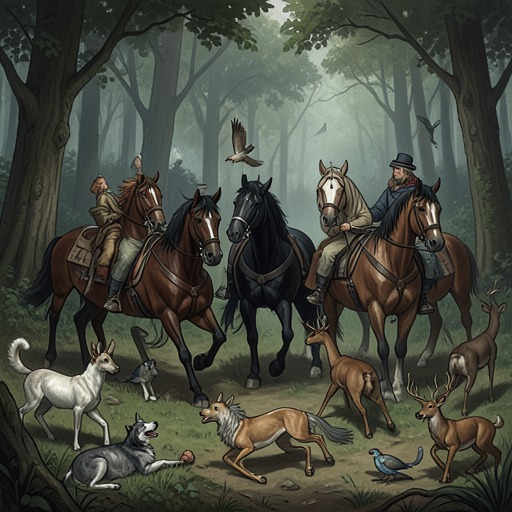
Lars remembers being asked to act after his mother saw an Alsatian hunting two young roe deer at the edge of the forest. The deer had been seen grazing in brushwood along the north meadow and usually stayed close together. The dog chased and encircled them, biting at their hocks; they were exhausted and had little chance of escaping. Unable to bear watching, Lars’s mother telephoned the bailiff, who told her that the dog would have to be shot. She then asked Lars whether he could manage it.
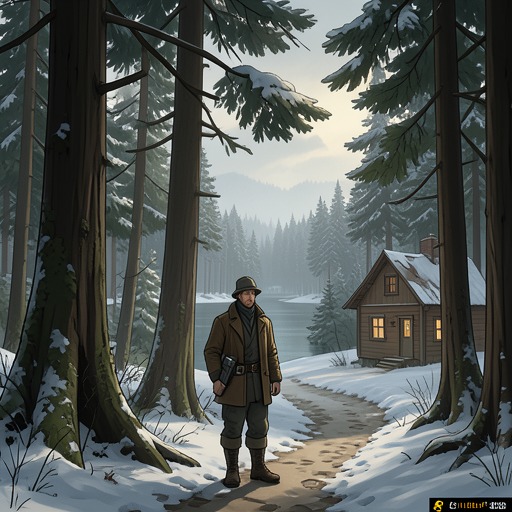
Lars did not want the job and hardly ever touched the gun. But he pitied the fawns, and there was no one else at home to take his place: his older brother was away at sea, and his stepfather was in the forest felling timber for a neighbouring farmer, as he usually did at that time of year. Lars fetched the gun and crossed the meadow. At the forest he could not see the Alsatian, so he stood listening. The air was unusually clear on that autumn midday, and the quiet felt uncanny. He looked back toward the house, knowing his mother was watching from the window and would not let him avoid the task; when he turned to the forest path again, the two roe deer were running toward him.
The shooting
Lars kneels, raises the gun, and lays his cheek against the barrel. The terrified deer run straight past him, within a hand’s breadth of his shoulder. He hears them panting and sees the whites of their eyes. Thirty metres behind them comes the Alsatian, described as a huge animal. Lars fires immediately. He thinks the first shot hits, but the dog does not alter its speed or direction. He fires a second time; the Alsatian drops to its knees, rises, and keeps running.
With the dog only a few metres away, Lars fires a third round. The animal somersaults, falls with its legs in the air, and slides to the toes of his boots. It is paralysed, not dead. Looking up at the dog, Lars feels sorry for it and bends to give it a final pat. When it growls and snaps at his hand, he jumps back, becomes furious, and fires two more rounds through its head. The remembered sequence holds pity and violence together: Lars’s compassion does not prevent the killing, and the animal’s resistance turns his attempted gesture of comfort into a moment of anger and further gunfire.
Promise and aftermath
Lars tells Trond that he was eighteen and that, although the event happened long ago, he will never forget it. The memory gives his present vow a specific history. He had been reluctant to shoot, but responsibility for stopping the attack fell to him; after the dog survived the first shots, his effort to approach it mercifully ended in a snap, anger, and two final rounds. The recollection does not present the outcome as easy or emotionally resolved. Lars’s later promise arose from a killing he considered necessary at the time and still remembers as an enduring burden.
Trond says he can understand why Lars would never shoot a dog again. Lars does not confirm that the promise is absolute; he answers that they will see. In the scene that prompted the story, Poker remains behind Trond while Lars prepares to take him inside. The recalled shooting thus sharpens the uncertainty of the nighttime encounter without settling it. Lars’s account explains why his hand has stopped, while his guarded reply leaves open whether memory and promise will be enough to determine what he does next.